AI + health
How to Sync Your Health Data with Claude
Omid Mirzaei · 2026-08-18 · 9 min
The model is only as useful as the week you give it. Here's how I get wearable rows, the lifting log, and sleep into Claude without dumping a medical archive into a chat box.
The model needs a week, not a screenshot
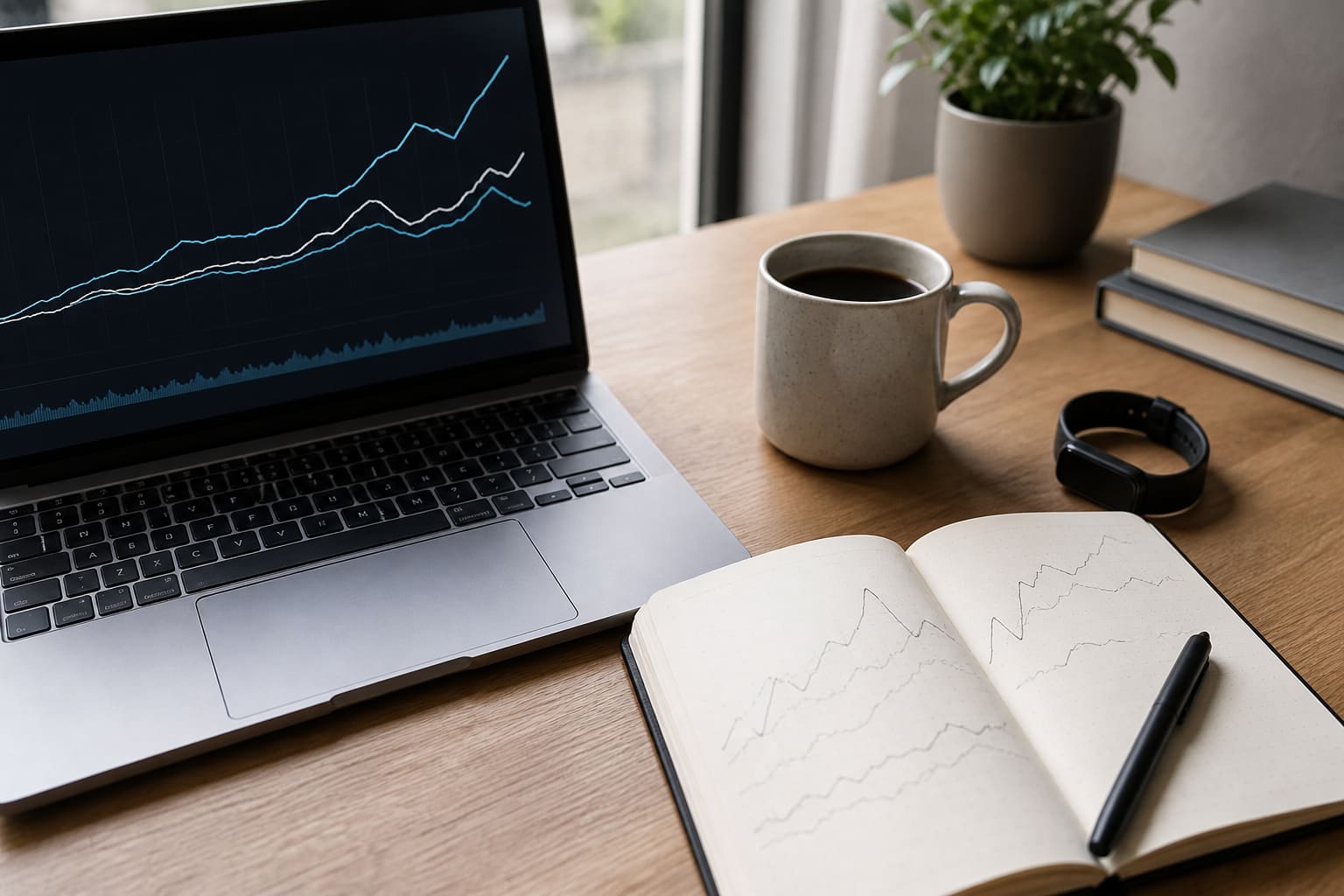
A language model can hold more numbers than I will on a Sunday. That only helps if the numbers are the right ones. Zignoli's version of this is response-guided training: look at the response, then pick the next dose (Zignoli, 2024). Wearable biosensing plus machine learning is being built as coaching support, not as a second doctor (Biosensors, 2026).
A screenshot of one recovery color is not a week. Neither is Apple's giant health export. The useful unit is fourteen to twenty-eight days of the same columns, plus the sessions the band cannot see. Miller's sleep-lab work is why overnight heart rate and HRV are the columns I trust first (Miller, 2022). Sleep stages are weaker. Paste the strong columns. Leave the noisy ones out of the first pass.
What to export, and what not to upload
From WHOOP, export or copy recovery, HRV, resting heart rate, sleep duration, and strain for at least two weeks. Nightly rows beat a color. The 2024 WHOOP review said the same split I use: heart rate and two-stage sleep are more usable than four-stage sleep (Panchawagh, 2024).
Apple Health's full export is a zip of XML. It is a bad Claude file. It is huge, it mixes years of steps with clinical entries you may not want in a consumer chat, and the model will spend tokens on noise. If you live in Apple Health, copy the week by hand or screenshot the trend charts you actually use: sleep, resting heart rate, a workout list. Garmin and similar platforms are the same: a CSV of the last month is better than 'export everything.'
Then add what the wearable cannot see. Session RPE. The lifting log. Easy versus hard on the run. Alcohol, travel, late screens, illness. Strain will over-weight the cardio. The bar is the correction. Plews argued that HRV monitoring works when you look at adaptation over time, not at a single morning (Plews, 2013). Put that in the project instructions so the model does not coach the screenshot.
- WHOOP: 14-28 days of recovery, HRV, RHR, sleep duration, and strain.
- Skip Apple's full health zip. Copy the week, or a small CSV, instead.
- Attach session RPE, the lifting log, and notes the band cannot see.
- Do not paste other people's records, lab PDFs with your address, or a medication list into a public chat.
Claude Projects, ChatGPT, and a prompt that stays put
I keep a Claude Project for training. The instructions stay. The week gets pasted. That is the whole sync. The project knows I'm a hybrid athlete who lifts and runs in the same week, that overnight HRV is compared to my baseline, that one yellow morning is not a diagnosis, and that the model may not invent race times or VO2 numbers the wearable did not measure.
ChatGPT custom GPTs and Gemini Gemma-style chats can do the same job if you pin the rules. The brand of model matters less than the file you feed it and the sentence that says 'weekly patterns, not a verdict on this morning.' Düking's review of HRV-guided endurance training is the decision rule I want the model to reuse: when the autonomic picture is suppressed, change intensity first (Düking, 2021).
If the tool lets you upload a CSV, upload the CSV. If it only takes paste, paste a table. If you use Claude's file tools, keep one running document for the last four weeks and replace it each Sunday. Do not start a fresh chat with a new personality every time the recovery color changes. That is daily panic with extra tokens.
A Sunday paste I reuse
Paste the export. State the sport: lift and run in the same week, plus whatever else actually happened, padel, a trail, a long easy bike. Tell the model to ignore single-day spikes unless they start a three-day drift. Ask it to line recovery, HRV, RHR, sleep, and strain up with session RPE and the lifting log.
Then constrain the output. No medical diagnoses. No invented accuracy percentages. Propose one primary quality for the next seven days and one maintenance quality. Name the days that should stay easy. If HRV and resting heart rate diverged from baseline while strain climbed, say that in a week, not in a scare sentence.
This isn't medical advice. Claude is not a clinician. WHOOP is not a medical device. If you have symptoms that aren't ordinary training fatigue, see a person who can examine you. Then come back to the log. Sync the week. Leave the archive off the prompt.
Takeaways
- Sync a week of the same columns, not a lifetime health export and not one recovery color.
- Pin the rules in a Claude Project or a custom GPT so Sunday is paste, not a new personality.
- Ask for weekly patterns and one quality to protect. Cut intensity first when the trend is down (Düking, 2021).
References
- Various authors (2026). Wearable Biosensing and Machine Learning for Data-Driven Training and Coaching Support. Biosensors. doi:10.3390/bios16020097
- Zignoli A (2024). Sports Science 3.0: AI, HRV and response-guided training. Sports Performance & Science Reports. Source
- Miller DJ, Sargent C, Roach GD (2022). A Validation of Six Wearable Devices for Estimating Sleep, Heart Rate and Heart Rate Variability in Healthy Adults. Sensors. doi:10.3390/s22166317
- Plews DJ, Laursen PB, Stanley J, Kilding AE, Buchheit M (2013). Training adaptation and heart rate variability in elite endurance athletes: opening the door to effective monitoring. Sports Medicine. doi:10.1007/s40279-013-0071-8
- Düking P, Zinner C, Reed JL, Holmberg HC, Sperlich B (2021). Monitoring and adapting endurance training on the basis of heart rate variability monitored by wearable technologies: A systematic review with meta-analysis. Journal of Science and Medicine in Sport. doi:10.1016/j.jsams.2021.04.012
- Panchawagh S, et al. (2024). Accuracy, Utility and Applicability of the WHOOP Wearable Monitoring Device in Health, Wellness and Performance: a systematic review. medRxiv. doi:10.1101/2024.01.04.24300784